What is Breast Mastopexy (Breast Lift) Surgery?
A breast mastopexy, also known as a breast lift without implants is a surgical operation designed to modify the contour and elevation of the breasts by removing excess skin and tightening the surrounding tissue.
This procedure specifically addresses breast ptosis, the medical term for descending breasts caused by factors such as gravity, pregnancy, weight fluctuations, and the natural ageing process.
Unlike an augmentation mastopexy, this approach does not utilise silicone or saline implants to add volume. Instead, it relies entirely on the patient’s existing natural tissue to alter the breast’s anatomical profile and reposition the nipple-areola complex to a higher location on the chest wall.
What makes a suitable candidate for Breast Mastopexy (Breast Lift) Surgery?
A suitable candidate for a mastopexy is typically an adult in good physical health who experiences descending breasts or downward-pointing nipples. Individuals who are generally satisfied with their current breast volume but wish to alter the position, shape, and firmness of their breast tissue may be appropriate for this surgery.
Candidates must be non-smokers—or willing to cease smoking well before and after surgery—as smoking severely impacts healing. Furthermore, suitable candidates must maintain realistic expectations regarding the surgical outcomes and be fully prepared to commit to the required post-operative care and recovery protocols.
Dr Mirkazemi assesses each patient’s anatomical suitability during a private clinical consultation.
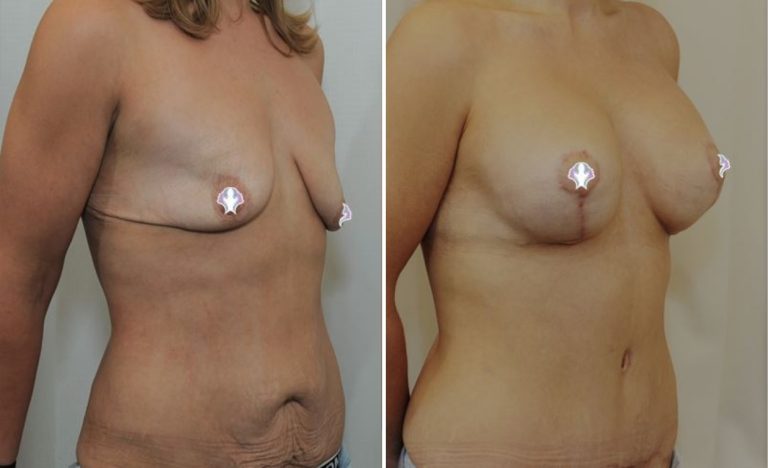
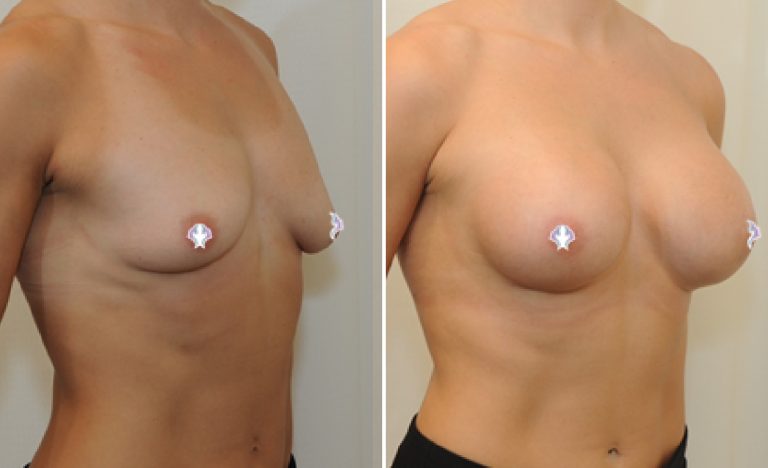
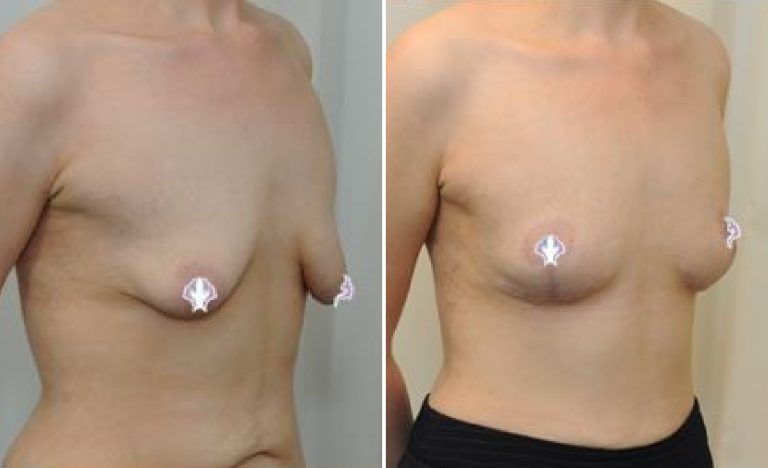
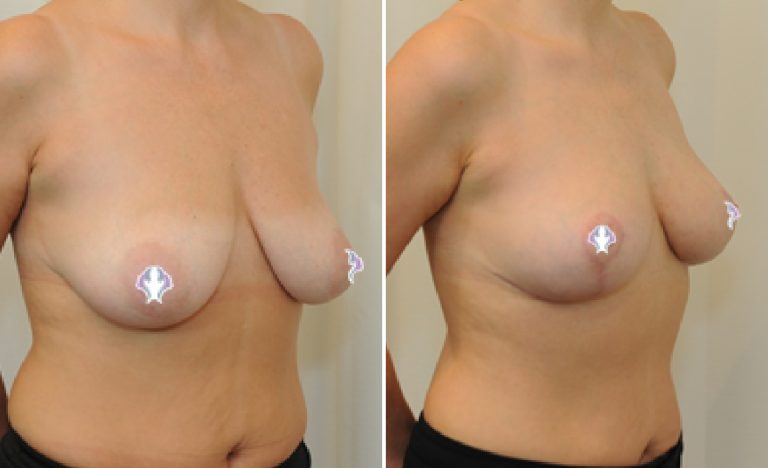
Before & Afters
Disclaimer: All surgeries before & afters shown on this website are performed by Dr Mirkazemi and are published with consent by our patients. They are not guarantees that your results will be the same or similar as results will vary between individuals. The content on our page is general in nature and does not constitute medical advice. Any surgery or invasive procedure carries risks and has a recovery time. Before proceeding, please seek medical advice from an appropriately qualified medical practitioner. During your consultation, Dr Mirkazemi will carefully evaluate each individual and provide an honest and realistic assessment of what can be expected from the procedure.
Breast Mastopexy (Breast Lift) surgical techniques
When considering a breast lift without implants, patients have options regarding how their specific degree of ptosis is addressed, which will depend heavily on their individual anatomy. Options may involve isolated areola repositioning for mild descent, or more comprehensive tissue reshaping and skin removal for moderate to severe ptosis. While some patients may also explore non-surgical skin tightening treatments as an alternative, these typically only affect superficial skin elasticity and cannot significantly alter breast position or address severe ptosis requiring surgical intervention.
Breast lift (mastopexy) surgical techniques
- Crescent Lift: This technique involves removing a small, crescent-shaped section of tissue
directly above the areola. It is generally utilised to address very mild breast descent and allows for a slight
upward shift of the nipple.
- Periareolar Lift (Benelli): Also referred to as a “doughnut lift,” this method removes a
circular perimeter of skin around the areola. It allows for the repositioning of the nipple-areola complex and
is typically suited for patients with mild to moderate ptosis.
- Vertical Lift (Lollipop or LeJour): This approach uses an incision around the areola and a
vertical incision descending to the breast crease. This enables the surgeon to remove excess skin and reshape
the breast tissue, making it a common choice for moderate ptosis.
- Anchor Lift (Inverted-T or Robbins): Considered for severe breast ptosis, this technique
involves incisions around the areola, vertically down to the breast crease, and horizontally along the
inframammary fold. This allows for extensive tissue modification and significant skin removal.
Recovery after Breast Mastopexy (Breast Lift) Surgery
The recovery process following a breast lift requires careful adherence to your surgeon’s specific post-operative instructions.
During week one, patients typically experience swelling, bruising, and discomfort, necessitating ample rest and the strict avoidance of any physical exertion or heavy lifting. By month one, acute swelling usually begins to subside, and patients may slowly transition back to light daily activities and non-strenuous work, depending on the physical demands of their occupation.
Around month three, the breast tissue continues to settle into its new position, and most individuals are cleared by their surgeon to gradually resume their full range of physical activities. Please note that individual healing timelines will vary based on personal physiological factors.
How much does Breast Mastopexy (Breast Lift) Surgery cost?
The financial investment required for a breast lift without implants varies depending on the individual parameters of the surgery.
Factors that influence the overall cost include the specific surgical technique required to address the degree of ptosis, hospital theatre fees, anaesthetist charges, and the duration of any required hospital stay. Because the procedure must be tailored to each patient’s unique anatomical needs and the complexity of the operation, an exact price cannot be provided online.
Following a comprehensive in-person clinical assessment, Dr Mirkazemi will provide a detailed, itemised quote that reflects your specific surgical plan.
Frequently Asked Questions for Breast Mastopexy (Breast Lift) Surgery
Specific Risks and Complications For Breast Mastopexy (Breast Lift) Surgery
Any surgical or invasive procedure carries risks. Before proceeding, you should seek a second opinion from an appropriately qualified health practitioner.
Breast lift (mastopexy) and breast reduction are surgical procedures designed to modify the position, volume, and contour of the breasts. While these procedures are common, they involve significant incisions and tissue modification. It is vital for patients to be fully informed of the potential clinical risks and complications to make an informed decision regarding their surgical journey.
The following list outlines possible complications. These risks are not exhaustive, and the likelihood of experiencing them varies based on individual health factors, anatomy, and the surgical technique employed.
Procedure-Specific Complications
- Changes in Nipple and Breast Sensation: Temporary or permanent numbness or altered sensitivity
in the nipples or
breast skin is a known risk. For most, sensation changes are temporary, but permanent loss can occur.
- Nipple or Skin Loss (Necrosis): In rare cases, the blood supply to the nipple or skin flaps may
be compromised,
leading to partial or total tissue loss. This may require specialized wound care or reconstructive surgery.
- Asymmetry: While every effort is made to achieve a proportional appearance, differences in
breast shape, size,
or nipple position may persist or develop during the healing process.
- Fat Necrosis: Areas of fatty tissue deep in the breast may lose blood supply and die. This can
result in firm
lumps under the skin, which may require clinical evaluation to distinguish them from other breast conditions.
- Inability to Breastfeed: Both breast lift and reduction surgery can involve repositioning the
nipple-areolar
complex. This may damage milk ducts or nerves, potentially impacting the ability to breastfeed in the future.
Long-Term Considerations
- Permanent Scarring: These procedures require extensive incisions. While Dr. Mirkazemi places
incisions to
minimize visibility, scarring is permanent. The final appearance of scars is influenced by genetics and
post-operative care.
- Unsatisfactory Anatomical Outcome: The surgical result may not align with a patient’s
anatomical expectations.
Factors such as skin elasticity and gravity will continue to affect the breast shape over time.
- Need for Secondary Procedures: Revision surgery may be necessary to address complications,
manage scarring, or
further modify the breast contour.
- Changes Over Time: The results of a breast lift or reduction are subject to change due to
ageing, hormonal
fluctuations, and weight changes.
General Surgical Risks
All surgical procedures, including plastic and cosmetic surgery, carry inherent risks and potential complications.
These may include infection, bleeding, fluid accumulation, delayed wound healing, scarring, nerve changes, anaesthetic risks, blood clots, and procedure-specific complications. Individual factors such as smoking, elevated BMI, underlying medical conditions, and certain medications can further influence your safety profile and recovery. A thorough consultation and strict adherence to pre- and post-operative instructions are essential to minimise risks.