What is Breast Augmentation Surgery?
Breast augmentation, clinically referred to as augmentation mammoplasty, is a surgical operation that involves the placement of breast implants or the transfer of autologous fat to modify the volume and contour of the breasts.
Patients may seek this procedure for various anatomical reasons, including addressing breast asymmetry, altering breast volume following pregnancy or weight loss, or for reconstructive purposes following a mastectomy or congenital abnormalities.
The procedure aims to change the physical proportions of the breast area based on individual physiological requirements and realistic expectations.
What makes a suitable candidate for Breast Augmentation Surgery?
A suitable candidate for breast augmentation is generally an adult over the age of 18 who is in good physical health and maintains a stable emotional and psychological well-being.
Candidates often present with breasts they feel are out of proportion with their; physique, noticeable asymmetry, or volume loss following life events such as pregnancy or significant weight fluctuations. It is essential that individuals have realistic expectations regarding the surgical outcomes and are fully committed to adhering to all post-operative care instructions.
A comprehensive consultation and physical examination with Dr Mirkazemi are required to assess your individual medical history and anatomical suitability for the surgery.
What are the Breast Augmentation Surgery options?
When considering breast augmentation, patients have several options regarding the type of implant used to achieve their desired anatomical changes. There are several types of breast implants available including:
- Silicone
- Saline (less common, but used in the USA more than Australia)
- Round
- Anatomical or shaped implants
- Smooth
- Textured
The most frequently utilised options include silicone and saline implants, which are available in various shapes, such as round or anatomical (teardrop) profiles. Implants also vary by surface texture, offering either smooth or textured outer shells.
During a consultation, Dr Mirkazemi discusses these variations in detail, ensuring the chosen implant type aligns with your specific physiological parameters and surgical objectives.
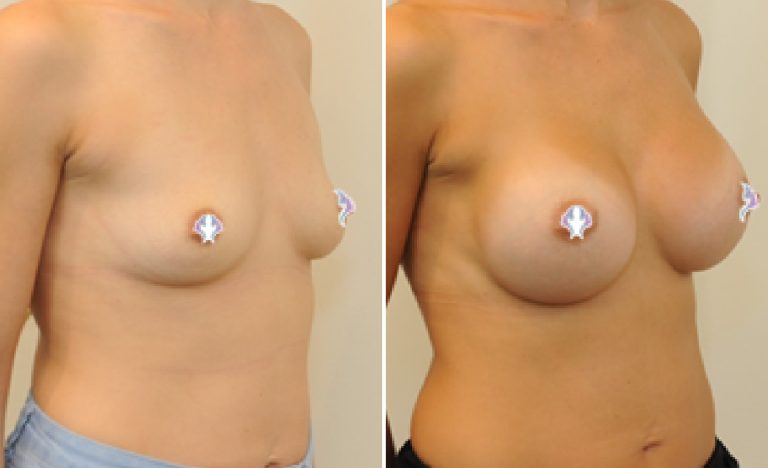
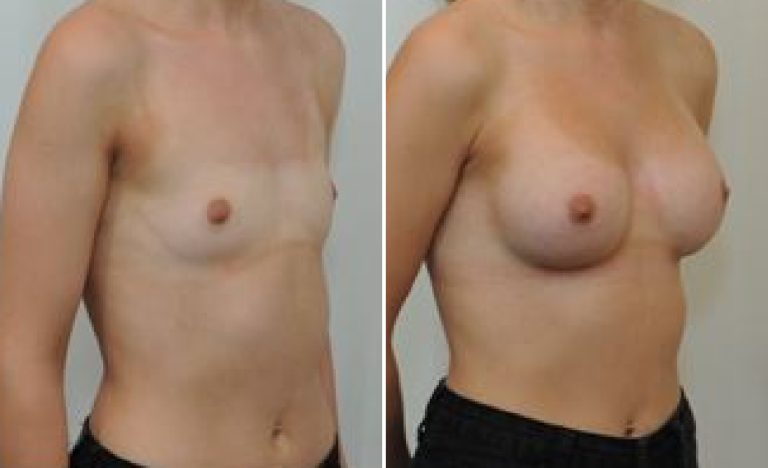
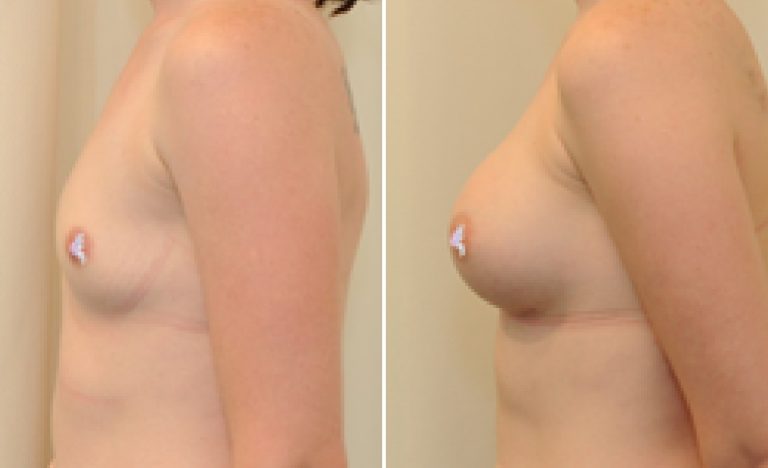
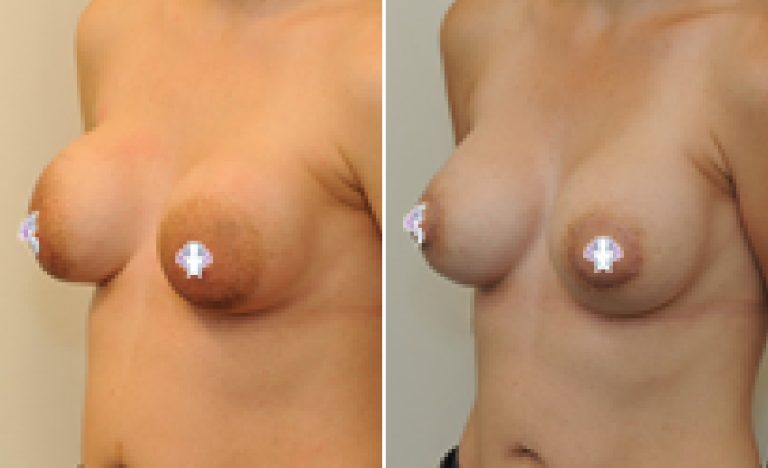
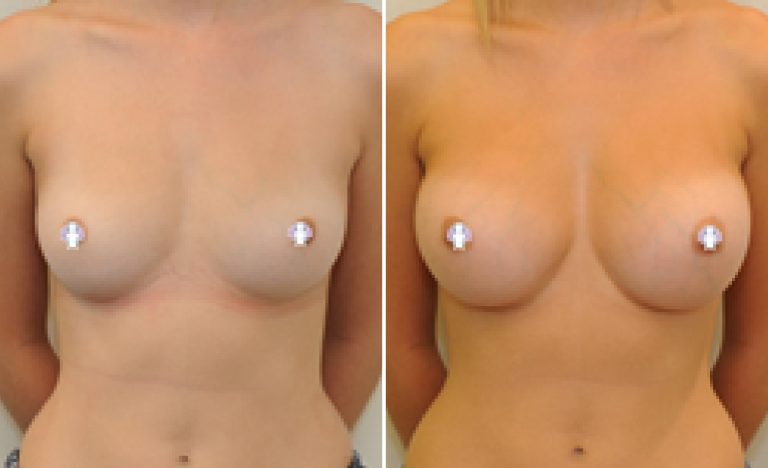
Before & Afters
Disclaimer: All surgeries before & afters shown on this website are performed by Dr Mirkazemi and are published with consent by our patients. They are not guarantees that your results will be the same or similar as results will vary between individuals. The content on our page is general in nature and does not constitute medical advice. Any surgery or invasive procedure carries risks and has a recovery time. Before proceeding, please seek medical advice from an appropriately qualified medical practitioner. During your consultation, Dr Mirkazemi will carefully evaluate each individual and provide an honest and realistic assessment of what can be expected from the procedure.
How Long Do Breast Implants Usually Last?
The functional lifespan of breast implants varies significantly between patients. While there is no fixed expiry date, medical consensus and manufacturer guidelines suggest that many patients may require a clinical review or replacement procedure approximately 10 to 15 years after their primary surgery. It is important to note that breast implants are not considered lifetime devices.
A breast implant revision procedure may be clinically indicated or requested based on several factors, including:
- Implant Integrity: Internal damage, such as a silent rupture or leak, which may require surgical intervention.
- Capsular Contracture: The development of firm scar tissue around the implant, which can lead to physical
discomfort or changes in breast firmness.
- Anatomical Changes: Natural fluctuations in weight or the effects of pregnancy and breastfeeding that alter skin
elasticity and breast tissue volume.
- Patient Preference: A desire to change the volume (size) of the implants or a preference for total implant
removal (explantation).
- Lifestyle and Health Factors: The impact of smoking on skin quality and long-term tissue health, or other
underlying medical conditions that affect the surgical site.
- Malposition: Changes in the placement or “settling” of the implant over time that may necessitate repositioning.
Dr. Mansoor Mirkazemi recommends regular clinical breast examinations and imaging, where appropriate, to monitor the ongoing condition of the implants.
Where are the Breast Implants Placed?
Breast implants can be placed in three different ways: under the muscle, over the muscle, and a dual-plane technique.
The most common location is ‘Under the muscle’ for the implant as it generally results in a more stable implant that is less likely to cause complications like breast ptosis. Dr Mirkazemi will carefully evaluate each individual patient to give the best recommendation.
Breast Augmentation Surgical Techniques
The surgical approach for breast augmentation involves specific incision techniques and placement strategies tailored to the patient’s anatomy.
Common incision sites include:
- Inframammary fold (an incision made in the crease under the breast)
- Periareolar incision (made along the lower border of the areola)
- Transaxillary incision (placed within the armpit).
Following the incision, the implant can be positioned in different anatomical pockets:
- Subglandular (over the pectoral muscle, beneath the breast tissue)
- Submuscular (completely or partially under the pectoral muscle)
- Utilising a dual-plane technique
Dr Mirkazemi determines the most appropriate technique based on your unique anatomy and the selected implant type.
Recovery after Breast Augmentation Surgery
The recovery period following breast augmentation requires patience and strict adherence to post-operative guidelines provided by your surgeon.
During the first week, patients typically experience swelling, bruising, and discomfort, necessitating rest and the avoidance of strenuous activities or heavy lifting.
By the one-month mark, most individuals notice a reduction in acute swelling and may be cleared to resume light to moderate daily routines, although high-impact exercises should still be avoided.
Around the three-month milestone, the tissues continue to settle, and patients can generally return to their full range of physical activities as advised by their surgeon.
*Please note that individual healing rates vary based on personal health factors.
How much does Breast Augmentation Surgery cost?
The cost of breast augmentation in Melbourne varies significantly depending on the individual parameters of each case.
Factors influencing the total investment include the specific surgical technique required, the type of breast implants selected, hospital theatre fees, anaesthetist charges, and the length of the hospital stay.
Because each surgery is tailored to the patient’s unique anatomical needs, an exact price cannot be provided without an in-person assessment. Following a thorough consultation, Dr Mirkazemi will provide a detailed, itemised quote that reflects your specific surgical plan.
Frequently Asked Questions for Breast Augmentation Surgery
Specific Risks and Complications For Breast Augmentation Surgery
Any surgical or invasive procedure carries risks. Before proceeding, you should seek a second opinion from an appropriately qualified health practitioner.
The following list outlines possible complications. These risks are not exhaustive, and individual outcomes are influenced by factors such as tissue quality, smoking status, and the body’s unique healing response.
Procedure-Specific Complications
- Changes in Nipple and Breast Sensation: Temporary or permanent numbness or altered sensitivity in the nipples or
breast skin is a recognized risk. In a combined procedure, the risk to the sensory nerves may be increased due
to the extent of tissue repositioning.
- Nipple or Skin Necrosis: The blood supply to the nipple or skin flaps can be compromised during the lifting and
augmentation process. In rare cases, this can lead to partial or total loss of the nipple-areolar complex or
skin, requiring reconstructive surgery.
- Asymmetry: Achieving absolute symmetry is not possible. Differences in breast shape, size, or nipple height may
persist or develop during the healing phases.
- Fat Necrosis: Deep tissue or fat may lose blood supply, leading to firm, sometimes tender lumps. While benign,
these may require clinical investigation.
Implant-Related Considerations
- Capsular Contracture: The body naturally forms a capsule of scar tissue around the implant. If this tissue
tightens, it can cause the breast to feel firm, look different, or cause discomfort.
- Implant Rupture or Leakage: Breast implants are medical devices with a limited lifespan. They may rupture over
time, which may be “silent” in the case of silicone or result in immediate deflation in the case of saline.
- Implant Malposition (Bottoming Out/Symmastia): The weight of the implant combined with the lifted skin can
sometimes cause the implant to shift downward or medially, altering the anatomical contour.
- BIA-ALCL: Breast Implant-Associated Anaplastic Large Cell Lymphoma (BIA-ALCL) is a rare type of T-cell lymphoma
that can develop in the scar capsule around the implant.
Long-Term Outcomes
- Permanent Scarring: This procedure requires extensive incisions around the areola, vertically, and often in the
breast fold. While Dr. Mirkazemi utilizes techniques to manage scar visibility, all surgical scarring is
permanent.
- Inability to Breastfeed: The repositioning of breast tissue and the nipple can affect milk ducts and nerves,
potentially impacting future breastfeeding capability.
- Need for Revision Surgery: Complications, changes in tissue over time, or implant-related issues may necessitate
further surgical intervention in the future.
General Surgical Risks
All surgical procedures, including plastic and cosmetic surgery, carry inherent risks and potential complications.
These may include infection, bleeding, fluid accumulation, delayed wound healing, scarring, nerve changes, anaesthetic risks, blood clots, and procedure-specific complications. Individual factors such as smoking, elevated BMI, underlying medical conditions, and certain medications can further influence your safety profile and recovery. A thorough consultation and strict adherence to pre- and post-operative instructions are essential to minimise risks.