What is Breast Reconstruction Surgery?
Breast reconstruction surgery involves a range of surgical techniques aimed at recreating a breast mound that closely matches the volume and shape of a natural breast. The procedure may involve utilizing synthetic implants, transferring the patient’s own tissue from another area of the body, or a combination of both methods.
This surgical process is typically performed after breast cancer treatment or trauma, with the primary objective of restoring physical symmetry and structural contour to the chest wall.
What makes a suitable candidate for Breast Reconstruction Surgery?
A suitable candidate for breast reconstruction surgery is typically an individual who has undergone, or is planning to undergo, a mastectomy or breast-conserving surgery and is in overall good health. Candidates must have adequate tissue availability if autologous (tissue-based) reconstruction is considered, and they should maintain realistic expectations regarding the surgical outcomes and the inherent limitations of the procedures.
Medical clearance from an oncology team is generally required, particularly for patients currently undergoing or recently finishing radiation or chemotherapy treatments, as these can impact healing and surgical viability.
What are the Breast Reconstruction Surgery options?
When considering breast reconstruction, patients generally choose between two primary options: implant-based reconstruction and autologous reconstruction.
Implant options involve the use of silicone or saline devices to form the new breast mound, while autologous options utilize the patient’s own skin, fat, and muscle harvested from regions such as the abdomen or back.
Additionally, patients have the option of immediate reconstruction, performed during the same operation as the mastectomy, or delayed reconstruction, which takes place months or years after the initial cancer treatments have concluded.
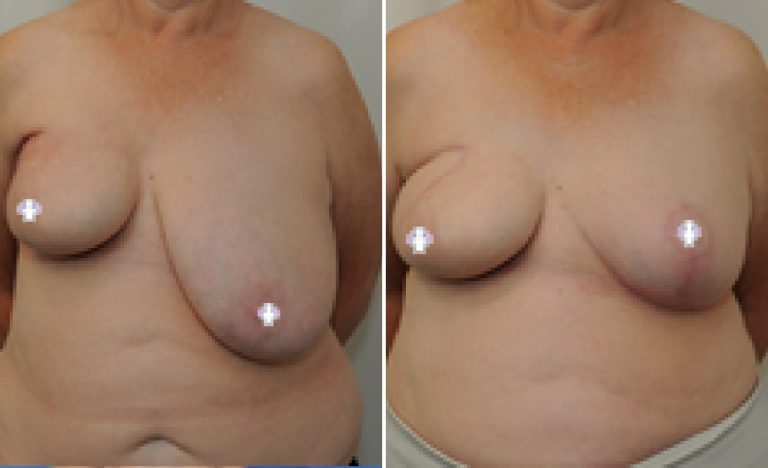
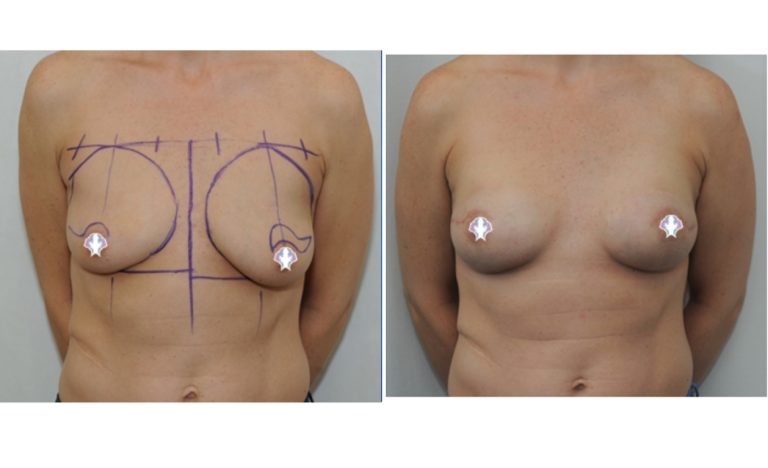
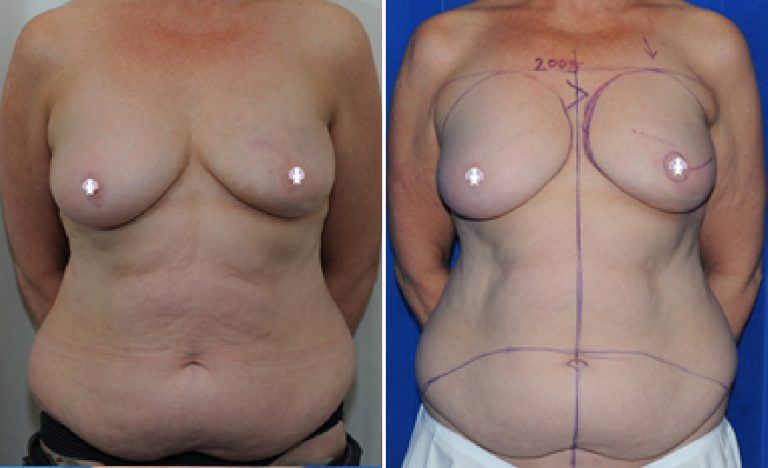
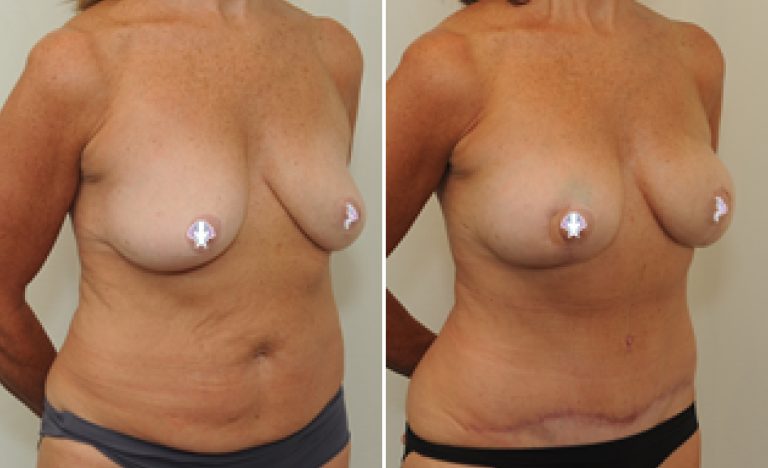
Before & Afters
Disclaimer: All surgeries before & afters shown on this website are performed by Dr Mirkazemi and are published with consent by our patients. They are not guarantees that your results will be the same or similar as results will vary between individuals. The content on our page is general in nature and does not constitute medical advice. Any surgery or invasive procedure carries risks and has a recovery time. Before proceeding, please seek medical advice from an appropriately qualified medical practitioner. During your consultation, Dr Mirkazemi will carefully evaluate each individual and provide an honest and realistic assessment of what can be expected from the procedure.
Breast Reconstruction surgical techniques
- Direct-to-Implant Reconstruction: A technique where a breast implant is placed immediately
following the removal
of breast tissue, often utilizing an acellular dermal matrix (a biological mesh) to support the implant.
- Tissue Expander Reconstruction: A multi-stage process involving the temporary placement of an
expandable device
beneath the chest muscle. This device is gradually filled with saline over several weeks to stretch the
surrounding skin and muscle before being replaced with a permanent implant in a secondary procedure.
- DIEP Flap Surgery: A microsurgical technique that transfers fat, skin, and blood vessels from
the lower abdomen
to the chest to recreate the breast volume, carefully dissecting the blood vessels to preserve the underlying
abdominal muscles.
- TRAM Flap Surgery: A procedure that utilizes tissue and muscle from the lower abdomen. The
tissue remains
attached to its original blood supply and is tunneled up beneath the skin to the chest wall to reconstruct the
breast mound.
- Latissimus Dorsi Flap: A technique utilizing a section of skin, fat, and muscle from the upper
back, which is
tunneled to the chest area. This method is frequently combined with a breast implant to achieve the desired
projection and volume.
Recovery after Breast Reconstruction Surgery
Recovery after breast reconstruction surgery is a gradual process that varies significantly depending on the specific surgical techniques utilized and the individual’s healing capacity.
During week one, patients generally experience localized swelling, bruising, and restricted mobility, requiring dedicated rest and careful monitoring of surgical drains and incision sites.
By month one, many individuals notice a reduction in acute swelling and may begin to resume light, non-strenuous daily activities, although residual fatigue often persists.
Approaching month three, tissues continue to settle into their new anatomical positions, and patients are typically cleared by their surgeon to gradually reintroduce more rigorous physical activities, while scar maturation continues to progress over the following year.
How much does Breast Reconstruction Surgery cost?
The cost of breast reconstruction surgery is highly variable and depends on the specific circumstances of each patient’s case. Factors influencing the total fee include the surgical techniques chosen (implant versus tissue flap), the complexity and duration of the operation, whether the reconstruction is immediate or delayed, and the necessity of staged or revision procedures.
A comprehensive consultation is required to provide a customized surgical plan and a detailed, itemized breakdown of associated costs, including surgeon fees, anaesthesia, hospital facility charges, and potential Medicare or private health insurance rebates.
Frequently Asked Questions for Breast Reconstruction Surgery
Specific Risks and Complications For Breast Reconstruction Surgery
Any surgical or invasive procedure carries risks. Before proceeding, you should seek a second opinion from an appropriately qualified health practitioner.
Breast reconstruction is a complex surgical process designed to recreate the contour and volume of the breast, typically following a mastectomy or lumpectomy. This can be achieved using breast implants, autologous tissue (flaps), or a combination of both. As with any major surgery involving significant tissue modification and, in some cases, microsurgery, it is essential that patients understand the potential clinical risks and complications.
The following list outlines possible complications. These risks are not exhaustive, and individual outcomes are influenced by factors such as previous radiation therapy, smoking history, and overall health.
Risks Specific to Autologous (Flap) Reconstruction
- Flap Failure (Tissue Loss): In “free flap” procedures, where tissue is moved from one part of
the body to the
chest, the blood vessels must be reconnected. If the blood supply fails (thrombosis), the transferred tissue may
partially or totally die (necrosis), necessitating its removal.
- Fat Necrosis: Areas of fatty tissue within the flap may not receive adequate blood supply,
leading to firm lumps
or oil cysts. While often harmless, they may require clinical monitoring.
- Donor Site Complications: Procedures involving tissue from the abdomen (DIEP flap) or back
(Latissimus Dorsi)
carry risks at the harvest site, including hernia, muscle weakness, or localized scarring.
Risks Specific to Implant-Based Reconstruction
- Capsular Contracture: The body naturally forms a capsule of scar tissue around a reconstruction
implant. If this
tissue tightens, the breast may feel firm or appear distorted.
- Implant Extrusion: In some cases, particularly if the overlying skin is thin or damaged by
radiation, the
implant may break through the skin, requiring surgical removal.
- Implant Malposition: The implant may shift from its intended anatomical position, leading to a
change in the
symmetry or contour of the chest.
Long-Term Considerations and Functional Risks
- Permanent Scarring: Reconstruction requires significant incisions at both the chest and
potentially a donor
site. While techniques are used to manage scar placement, permanent scarring is inevitable.
- Changes in Sensation: It is common to experience permanent numbness or altered sensation in the
reconstructed
breast and the donor site.
- Asymmetry: Achieving a balanced proportions between the reconstructed breast and the natural
breast is a primary
goal, but some degree of asymmetry in size, shape, or position often persists.
- Need for Secondary Procedures: Breast reconstruction is often a multi-stage process. Additional
surgeries may be
required for nipple reconstruction, fat grafting to address contour irregularities, or to adjust the opposite
breast for better symmetry.
- Impact on Future Screenings: Reconstructed tissue can make subsequent clinical examinations
more complex, though
specialized imaging techniques are available.
General Surgical Risks
All surgical procedures, including plastic and cosmetic surgery, carry inherent risks and potential complications. These may include infection, bleeding, fluid accumulation, delayed wound healing, scarring, nerve changes, anaesthetic risks, blood clots, and procedure-specific complications. Individual factors such as smoking, elevated BMI, underlying medical conditions, and certain medications can further influence your safety profile and recovery. A thorough consultation and strict adherence to pre- and post-operative instructions are essential to minimise risks.