What is Abdominoplasty Surgery?
Abdominoplasty is a surgical procedure aimed at altering the contour of the abdomen by excising redundant skin and localized fat deposits.
Depending on the patient’s physical requirements, the procedure may also involve the surgical tightening of weakened or separated abdominal muscles (diastasis recti), which frequently occurs following significant weight loss, pregnancy, or due to genetic factors.
The primary goal is to address tissue laxity that does not respond to diet and exercise, reshaping the abdominal wall for a firmer profile.
Please note – The Australian Government has reinstated a Medicare Item Number for an abdominoplasty for some post-pregnancy patients suffering from Diastasis Recti (split abdominal muscles) if you are eligible and meet the new criteria. This new 30175 Medicare Item Number – is effective 1st July 2022. Read the 30175 Medicare Item Number factsheet.
If you qualify for the 30175 Medicare item number you may also get a subsidy from your Health Fund. There will still be a significant out-of-pocket GAP.
What makes a suitable candidate for Abdominoplasty Surgery?
A suitable candidate for abdominoplasty surgery is typically an adult in good overall health who has maintained a stable weight but struggles with persistent, loose abdominal skin or separated abdominal muscles.
It is generally recommended that female candidates have completed their family planning, as subsequent pregnancies can alter the surgical outcome by re-stretching the abdominal muscles and skin.
Individuals must have realistic expectations regarding the physical outcomes and limitations of the surgery, and they must refrain from smoking to support the body’s natural healing process.
What are the Abdominoplasty Surgery options?
When considering abdominoplasty, patients have several surgical options tailored to address their specific anatomical concerns.
These options generally range from a partial or “mini” abdominoplasty, which focuses strictly on the lower abdomen without muscle repair, to a full abdominoplasty that addresses the entire abdominal wall and incorporates muscle tightening.
Other variations include an extended abdominoplasty for significant excess tissue reaching the flanks, or a lipo-abdominoplasty, which integrates liposuction to address stubborn fat pockets alongside the surgical removal of skin.
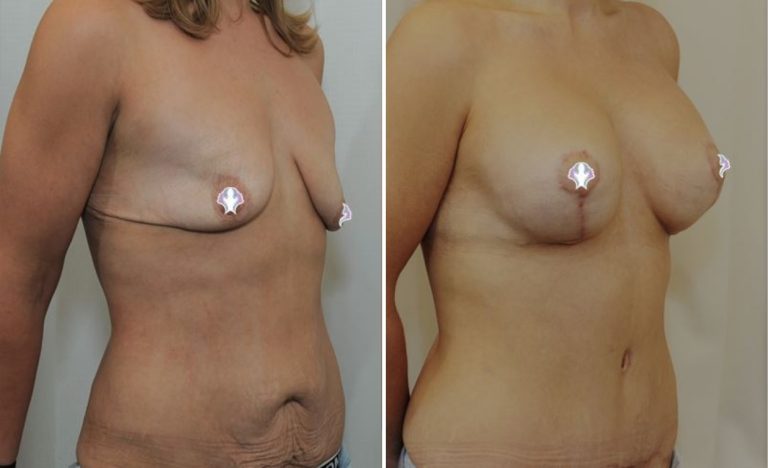
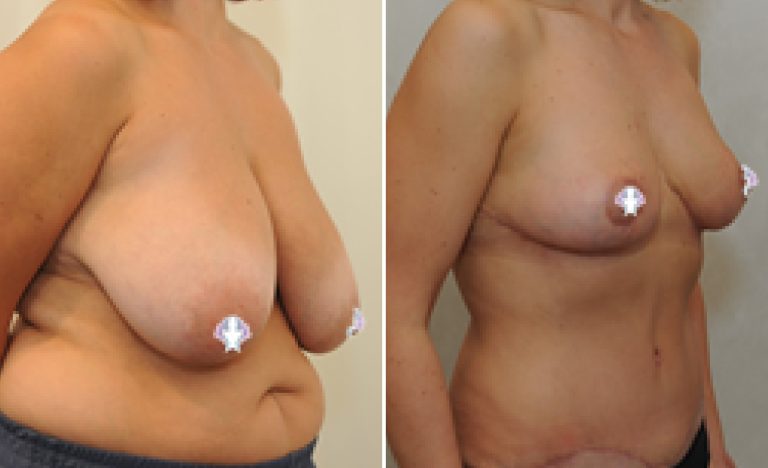
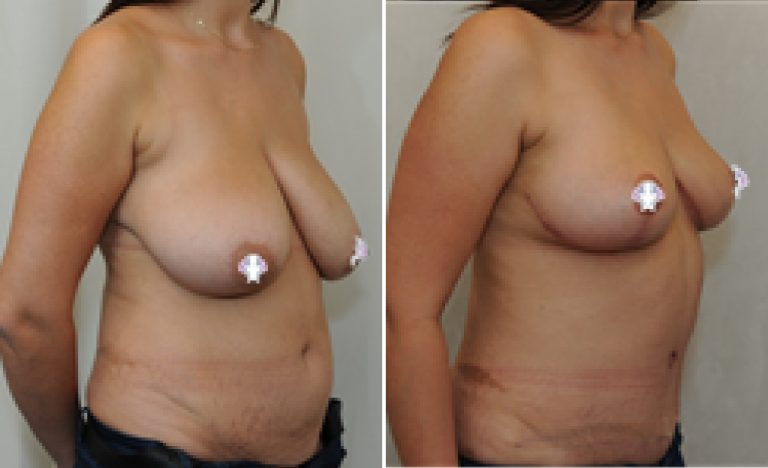
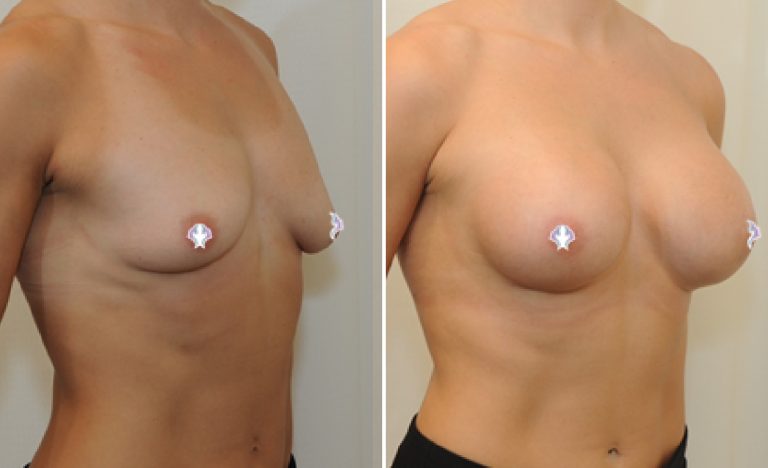
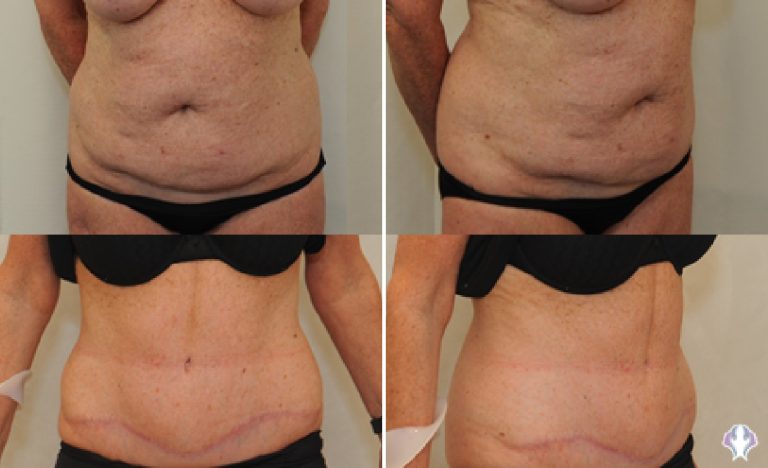
Before & Afters
Disclaimer: All surgeries before & afters shown on this website are performed by Dr Mirkazemi and are published with consent by our patients. They are not guarantees that your results will be the same or similar as results will vary between individuals. The content on our page is general in nature and does not constitute medical advice. Any surgery or invasive procedure carries risks and has a recovery time. Before proceeding, please seek medical advice from an appropriately qualified medical practitioner. During your consultation, Dr Mirkazemi will carefully evaluate each individual and provide an honest and realistic assessment of what can be expected from the procedure.
Abdominoplasty surgical techniques
- Full Abdominoplasty: A comprehensive procedure involving a horizontal incision between the pubic hairline and the navel. Excess skin and fat are removed, the underlying separated abdominal muscles are sutured together (repaired), and the umbilicus (belly button) is repositioned to match the new abdominal contour.
- Partial (Mini) Abdominoplasty: A localized approach utilizing a smaller incision to remove excess skin and fat situated exclusively below the navel. This technique is typically performed without the need to repair separated muscles or reposition the belly button.
- Extended Abdominoplasty: A technique designed for patients with substantial excess tissue, often following massive weight loss. The incision extends further around the flanks or lower back to address broader areas of redundant skin and fat.
- Lipo-Abdominoplasty: A combined surgical approach that utilizes liposuction to remove localized fat deposits from the abdominal region and flanks, followed by the standard surgical excision of excess skin to achieve a comprehensive reshaping of the waistline.
Abdominoplasty – The Procedure
During an abdominoplasty procedure, Dr. Mansoor Mirkazemi performs surgical incisions to access the underlying abdominal structures. The specific technique employed is determined by the patient’s clinical requirements, anatomical considerations, and the surgical plan established during the pre-operative consultation at our Collins Street practice.
The following steps outline the clinical progression of a standard abdominoplasty:
Anaesthesia and Clinical Monitoring
The procedure is performed under general anaesthesia in an accredited hospital setting. A qualified anaesthetist is responsible for administering the anaesthesia and monitoring the patient’s physiological vitals throughout the duration of the surgery. This allows Dr. Mirkazemi to focus on the surgical dissection and repair.
Surgical Incisions
Dr. Mirkazemi makes an incision in the lower abdominal region, typically positioned between the pubic hairline and the navel. The dimensions and configuration of the incision vary based on the volume of excess skin to be addressed. The primary objective is to allow sufficient access to the abdominal wall while placing the resulting scar where it may be concealed by standard undergarments.
Tissue Dissection and Muscle Repair
The skin and subcutaneous fat are separated from the underlying abdominal musculature. This dissection often extends toward the ribcage to create a mobile skin flap. If the patient presents with diastasis recti (separation of the paired rectus abdominis muscles), Dr. Mirkazemi uses internal sutures to bring the muscles back into alignment. This step is intended to address muscle laxity and reinforce the abdominal wall.
Excision of Excess Tissue
The redundant skin flap is drawn downward, and the excess skin and associated fat are surgically excised. This stage of the procedure addresses the physical weight and laxity of the overstretched abdominal tissue.
Umbilical (Belly Button) Transposition
In a full abdominoplasty, the position of the navel must be managed as the skin is shifted. Dr. Mirkazemi creates a new opening in the repositioned skin flap, through which the existing umbilicus is brought to the surface and sutured into its new anatomical position.
Wound Closure and Drainage
The incisions are closed using a combination of deep internal sutures to provide structural support and superficial sutures for the skin edges. In some cases, temporary surgical drains are inserted beneath the skin to prevent the accumulation of fluid (seroma). Sterile dressings and a medical-grade compression garment are applied immediately following the procedure to support the surgical site during the initial stages of healing.
Recovery after Abdominoplasty Surgery
Recovery after abdominoplasty is a gradual process that demands strict adherence to specific post-operative care protocols.
During week one, patients generally experience localized swelling, bruising, and a feeling of tightness across the abdomen, requiring dedicated rest, drain management if applicable, and the continuous use of a supportive compression garment.
By month one, acute swelling often begins to decrease, and patients may gradually return to light, non-strenuous daily activities and desk work, though heavy lifting and strenuous exercise must still be avoided.
Nearing month three, the abdominal tissues continue to settle, and most individuals receive clearance from their surgeon to slowly reintroduce more vigorous physical activities, while the scar maturation process continues to progress over the following year.
How much does Abdominoplasty Surgery cost?
The cost of abdominoplasty surgery is highly individualized and depends on the specific surgical techniques required and the overall complexity of the operation.
Factors influencing the total fee include surgeon fees, anaesthesia costs, hospital facility charges, and the necessity of extended hospital stays or supplementary procedures like liposuction.
A comprehensive consultation is required to provide a customized, itemized quote, and to discuss potential eligibility for Medicare Item Number 30175 or private health insurance rebates, which apply strictly to patients meeting specific medical criteria for post-pregnancy diastasis recti or massive weight loss.
Frequently Asked Questions for Abdominoplasty Surgery
Specific Risks and Complications For Abdominoplasty Surgery
Any surgical or invasive procedure carries risks. Before proceeding, you should seek a second opinion from an appropriately qualified health practitioner.
Abdominoplasty is a major surgical procedure used to modify the abdominal wall by removing excess skin and fat and, in many cases, addressing the underlying muscle structure (rectus diastasis). Due to the extensive nature of the incisions and the degree of tissue undermining required, it is essential for patients to be fully aware of the clinical risks and potential complications involved.
The following list outlines possible complications associated with abdominoplasty. These risks are not exhaustive, and individual outcomes are influenced by factors such as health status, smoking history, and adherence to post-operative protocols.
Procedure-Specific Complications
- Delayed Wound Healing and Skin Loss (Necrosis): The blood supply to the skin flaps of the abdomen can be compromised during surgery. This may result in delayed healing, wound breakdown (dehiscence), or partial skin loss, particularly in the lower abdominal area.
- Sensation Changes: Patients typically experience numbness or altered sensation in the abdominal skin and occasionally the upper thighs. While often temporary, some areas of numbness may be permanent.
- Umbilicus (Belly Button) Issues: The appearance of the navel may be altered, and in rare cases, the blood supply to the navel may be compromised, leading to partial or total loss of the tissue.
- Fat Necrosis: Fatty tissue deep under the skin may lose its blood supply and become firm or lumpy. This may require clinical monitoring or surgical removal if discomfort persists.
- Asymmetry: Achieving a perfectly symmetrical result is not always possible due to pre-existing anatomical variations in muscle, skin, and fat distribution.
Long-Term Considerations
- Permanent Scarring: Abdominoplasty requires a long incision, typically from hip to hip. While Dr. Mirkazemi places incisions low on the abdomen, scarring is permanent and its final appearance is dependent on individual healing characteristics.
- Unsatisfactory Anatomical Outcome: The surgical results may not align with a patient’s anatomical goals. Factors such as skin elasticity and subsequent weight fluctuations can affect the long-term appearance of the abdomen.
- Need for Secondary Procedures: Revision surgery may be required to address complications, refine the abdominal contour, or manage symptomatic scarring.
- Changes Over Time: The results of an abdominoplasty are subject to change due to natural ageing, significant weight changes, or future pregnancies.
General Surgical Risks
All surgical procedures, including plastic and cosmetic surgery, carry inherent risks and potential complications.
These may include infection, bleeding, fluid accumulation, delayed wound healing, scarring, nerve changes, anaesthetic risks, blood clots, and procedure-specific complications. Individual factors such as smoking, elevated BMI, underlying medical conditions, and certain medications can further influence your safety profile and recovery.
A thorough consultation and strict adherence to pre- and post-operative instructions are essential to minimise risks.