What is a Non-Surgical Rhinoplasty?
Non-surgical rhinoplasty is an invasive cosmetic procedure that involves the strategic injection of dermal fillers to alter the shape and contour of the nose. Rather than removing tissue or altering the underlying bone and cartilage, this method adds volume to specific areas to camouflage dorsal humps, modify the nasal tip, or address asymmetry. The procedure provides temporary modifications to the nasal profile and requires ongoing maintenance to sustain the altered appearance over time.
What makes a suitable candidate for Non Surgical Rhinoplasty?
A suitable candidate for non-surgical rhinoplasty is typically an adult seeking to alter the contour of their nose without undergoing a surgical operation. Individuals looking to add volume to the nasal bridge, modify a flat profile, or address minor structural irregularities may be appropriate candidates.
It is important that patients have realistic expectations, understand that this procedure cannot reduce the size of the nose, and recognise that the modifications are temporary. A detailed consultation is required to assess your anatomy and determine if your goals can be addressed through volume augmentation.
What are your Non Surgical Rhinoplasty options?
When considering non-surgical rhinoplasty, options primarily revolve around the type of temporary dermal fillers used, which are typically composed of hyaluronic acid to add volume and modify nasal contours.
Alternative options include considering formal surgical rhinoplasty for those seeking long-lasting structural changes or a reduction in nasal size, as well as the option to dissolve hyaluronic acid fillers using a specific enzyme if the patient wishes to reverse the temporary volume augmentation.
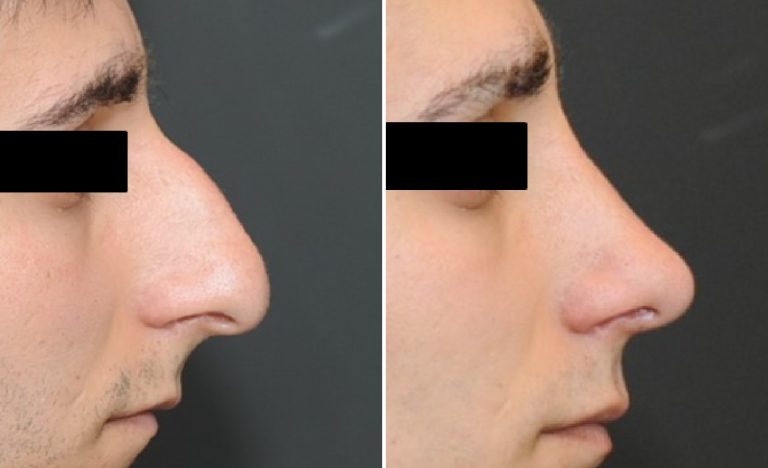
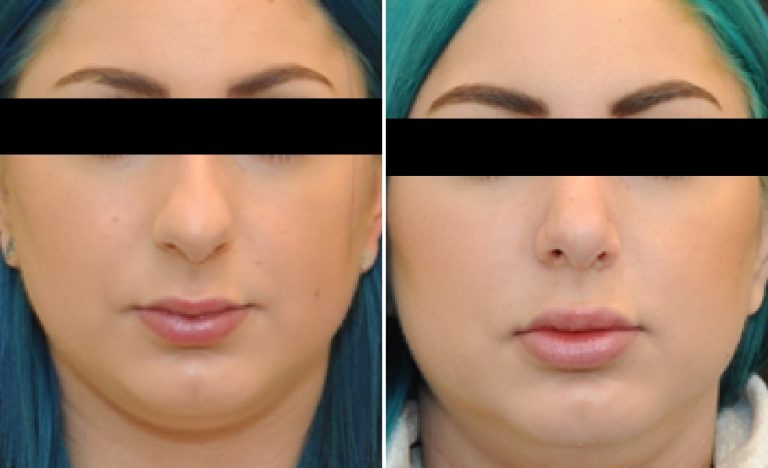
Before & Afters
Disclaimer: All surgeries before & afters shown on this website are performed by Dr Mirkazemi and are published with consent by our patients. They are not guarantees that your results will be the same or similar as results will vary between individuals. The content on our page is general in nature and does not constitute medical advice. Any surgery or invasive procedure carries risks and has a recovery time. Before proceeding, please seek medical advice from an appropriately qualified medical practitioner. During your consultation, Dr Mirkazemi will carefully evaluate each individual and provide an honest and realistic assessment of what can be expected from the procedure.
Non Surgical Rhinoplasty techniques
- Dorsal Hump Camouflage: This technique involves injecting filler above and below a prominent convexity on the nasal bridge to add volume and create the appearance of a straighter profile.
- Tip Projection: Carefully placed injections at the nasal tip can modify its shape and projection, altering the angle of the nose.
- Bridge Augmentation: For individuals with a flat or low nasal bridge, filler is applied along the dorsum to build up the area and alter the facial proportions.
- Asymmetry Modification: Dermal fillers can be strategically injected to address minor irregularities and bring a more proportional appearance to the nasal contours.
Recovery after a Non Surgical Rhinoplasty
Recovery following a non-surgical rhinoplasty is generally brief, though it involves a settling period for the injectable product.
During week one, patients may experience localised swelling, redness, and minor bruising at the injection sites, and are advised to avoid applying pressure to the nose.
By month one, any initial swelling and bruising typically resolve, and the dermal filler integrates with the surrounding tissue to display the final altered contour.
By month three, the product remains stable in its position, and patients simply monitor the area as the temporary volume augmentation will gradually be metabolised by the body over subsequent months.
How much does a Non Surgical Rhinoplasty cost?
The cost of a non-surgical rhinoplasty is determined on a case-by-case basis, depending on the specific anatomical requirements and the volume of dermal filler needed to achieve the desired modifications.
A comprehensive quote will account for the type and amount of product used, as well as the practitioner’s fee and facility costs. A detailed, individualised financial estimate is provided following a thorough consultation and assessment of your nasal anatomy.
Frequently Asked Questions for a Non Surgical Rhinoplasty
Specific Risks and Complications For A Non-Surgical Rhinoplasty
Non-surgical rhinoplasty involves the use of dermal fillers to modify the anatomical contour and shape of the nose. While this is a non-surgical treatment, it is classified as a higher-risk cosmetic procedure due to the complex vascular anatomy of the mid-face. It is essential for patients to understand the clinical risks and potential complications before proceeding.
The following list outlines possible complications. These risks are not exhaustive, and individual experiences may vary based on anatomical factors and the type of dermal filler used.
High-Risk Vascular Complications
- Vascular Occlusion: This is the most serious risk associated with non-surgical rhinoplasty. It occurs if the dermal filler is inadvertently injected into a blood vessel or compresses a vessel, blocking blood flow.
- Skin Necrosis: If blood flow is compromised by vascular occlusion, the overlying skin and tissue may die (necrosis), potentially leading to permanent scarring and tissue loss.
- Vision Impairment or Blindness: Although rare, if filler enters the arterial circulation around the nose, it can travel to the vessels supplying the retina. This can lead to sudden, permanent vision loss or blindness. This is a medical emergency.
Anatomical and Aesthetic Considerations
- Implant Migration: The dermal filler may shift or migrate from the initial placement site over time, which can alter the intended contour of the nose.
- Asymmetry: Achieving balanced proportions can be challenging. Differences in the anatomical shape or volume between the sides of the nose may persist or develop.
- Tyndall Effect: If the filler is placed too superficially, a bluish discolouration may be visible through the skin.
- Unsatisfactory Anatomical Result: The procedure may not achieve the specific anatomical modification desired by the patient.
- Longevity and Repeat Procedures: Dermal fillers are not permanent. The results will change over time as the body metabolises the product, necessitating further treatments to maintain the modified contour.
General Surgical Risks
All surgical procedures, including plastic and cosmetic surgery, carry inherent risks and potential complications.
These may include infection, bleeding, fluid accumulation, delayed wound healing, scarring, nerve changes, anaesthetic risks, blood clots, and procedure-specific complications. Individual factors such as smoking, elevated BMI, underlying medical conditions, and certain medications can further influence your safety profile and recovery.
A thorough consultation and strict adherence to pre- and post-operative instructions are essential to minimise risks.